


The IASTED International Conference on
Nanotechnology and Applications
~NANA 2008~

September 29 – October 1, 2008
Crete, Greece

CALL FOR PAPERS

Sponsors

The International Association of Science and Technology for Development (IASTED)

World Modelling and Simulation Forum (WMSF)
WMSF

Collaborating Society

The Biomaterials Network

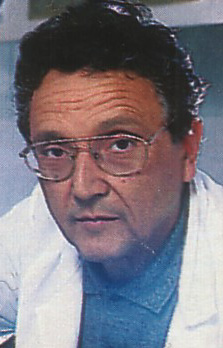
Conference Chair

Prof. Claudio Nicolini – Nanoworld Institute, University of Genoa, Italy

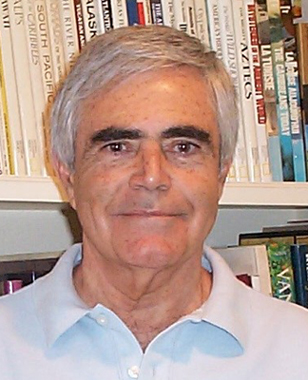
Keynote Speaker

Prof. Mark Welland – University of Cambridge, UK

Tutorial Session

"Introduction to Nanorobotics"
Prof. Ari Requicha – University of Southern California, USA

Main Session

"Synchrotron and Nanobiology"
Dr. Christian Riekel – European Synchrotron Radiation Facility (ESRF), France

Special Sessions

"Advancements and Applications of Scanning Probe Microscopy Techniques"
Dr. Pascal Ruffieux – EMPA, Switzerland

"Surface Chemistry/Coating on Nanomaterials"
Dr. Kijung Yong – POSTECH, Korea

Panel Sessions

"Revolutionary Nanocomputing"
Dr. Mikko A. Uusitalo – Nokia Research Center, Finland

"Protein Nanocrystallography"
Dr. Eugenia Pechkova – Nanoworld Institute, Italy

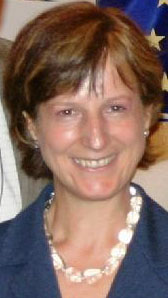
"Small Divides, Big Challenges? Nanotechnologies, Access and Human Health"
Prof. Elena Pariotti – University of Padova, Italy

"Nanopharmacology and Molecular Simulations"
Prof. M. P. Kirpichnikov – Moscow State University, Russia

Purpose

Nanotechnology is one of the most promising technological fields in the world today. Although many of its greatest advances are at least a generation out, and some of the predicted gains are speculative, nanotechnology offers the potential to revolutionize the way people live their lives. Nanorobots within the human body may one day detect, find and eliminate diseases and threats to human health while they are still in the nascent stage. Nanoscale science may dramatically improve on current fibre-optics and electronics technology while ameliorating the cost, durability, and weight of extant aircraft building materials. No less important, nanotechnology could one day solve the world's energy problems.

The IASTED International Conference on Nanotechnology and Applications (NANA 2008), to be held in Crete, Greece, will bring together leading experts in the fields of nanobiotechnology, nanoelectronics, power and energy, environmental applications, nanomaterials, and nanoethics. All papers submitted to this conference will be double blind reviewed by at least two reviewers. Acceptance will be based primarily on originality and contribution. The conference chair makes the final decision on the acceptance or rejection of the paper.

Location

Crete
Creative Commons License, Attribution Picture Above: Rethymnon © Robert Young; Banner Credits: Hania harbour At Dusk © Robert Young; Some Photos have Some Rights Reserved.

Crete is the largest island in Greece and the ancient seat of the Minoan culture, the oldest civilization in Europe. They left impressive ruins at sites like Knossos and Phaistos, and over thousands of years of inhabitation, Roman, Byzantine, Venetian, and Ottoman cultures have left their distinctive marks on the island. The sense of history will awe any visitor, and so will the natural splendor. The millions of olive trees blanketing the island combined with the warm sunny weather will seem like a paradise, and this is before you even visit the beaches! Check out the stunning White Mountains and the famous Samaria Gorge; you are sure to see the kri-kri, a Cretan wild goat. Spend your evenings relaxing with good food and drink in a local taverna, and savor the joy of your surroundings.


Scope

The topics to be covered include, but are not limited to:

Nanobiotechnology

  • Drug and Gene Delivery
  • Nanomedicine
  • Medical Devices
  • Nanolithography
  • Neuro-Electronic Interfaces
  • Nanorobotics
  • Nanoscale Modelling
  • DNA Computing
  • Nanovaccinology
  • Nanoimaging
  • MRI in Medical Diagnostics
  • Von Neumann Architectures
  • Vasculoids
  • Positional Navigation
  • Pharmacytes
  • Inmessaging
  • Outmessaging
  • Nanosieving
  • Molecular Surgery
  • Cell Surgery
  • Cell Engineering
  • Functional Navigation
  • Mathematical Modelling
  • Bioengineering
  • Piezoelectricity
  • Top-Down Manufacturing and Assembly
  • Biosensors
  • Bioimaging
  • Nanobiomechanics
  • Molecular Self-Assembly
  • Intelligent Systems
  • Cryonics
  • Nanoproteomics
  • Nanogenomics
  • Nanoethics

Power and Energy

  • Nanoenergetics
  • Solar Power
  • Photovoltaic Systems
  • Geothermal Energy
  • Fuel Cells
  • Clean Energy
  • Renewable Energy
  • Wind Power
  • Non-Thermal Energy Use
  • Molecular Separation
  • Nanogenerators
  • Energy Security
  • Localized Generation and Storage
  • Energy Transmission
  • Energy Conservation
  • Desalinization
  • Supercapacitors
  • Thin Film Batteries
  • Nanofluidics
  • Nanoparticles for Jet Propulsion
  • Microemulsion
  • Nanoparticle Absorbers
  • Heavy Oil Upgrading
  • Environmental Molecular Engineering
  • In-Situ Applications
  • Environmental Remediation
  • PCBs
  • Nanofiltration
  • VOCs
  • Groundwater Cleanup
  • Pollution Prevention
  • Chemical and Biological Sensing
  • Produced Water
  • Dematerialization
  • Nanostructured Photocatalysts
  • Green Nanotechnology

Nanoelectronics

  • Fiber Optic Communication
  • Superconductors
  • Cryptography and Security
  • Quantum Computing
  • Molecular Computers
  • Carbon Nanotubes (CNTs)
  • Quantum Dots
  • Nanocrystals
  • Nanosensors
  • Quantum Tunneling
  • NEMS
  • Next-Generation Computer Chips
  • Batteries
  • Nanotransistors
  • Combinatorial Optimization Problems
  • CNT-FETs
  • CNT-FET-CMOS Integration
  • CNT-FET Modelling
  • CNT Interconnection
  • Phased-Lock Loops
  • Phase Noise & Jitter
  • Deep Submicron Integrated Circuit Testing
  • Nanometer CMOS Sigma-Delta ADC/DAC
  • Nanometer CT Sigma-Delta ADC/DAC
  • Nanophotonics
  • Biometrics
  • Scanning Tunneling Microscopy
  • Nanooptics

Nanomaterials

  • Clothing
  • Cosmetics
  • Food
  • Automotive
  • Smart Materials
  • Lightweight Materials
  • Superstrength Materials
  • Nanoknots
  • Insulation Materials
  • Polymer Nanocomposites
  • Distributed Fabrication
  • Convergent Assembly
  • CNT Materials
  • Nanometrology
  • Nanofabrication
  • Nanocomposite Coatings
  • Organic Nanotechnology
  • Nanomechanics

International Program Committee

Click here for a list of the program committee for NANA 2008.

Submission

Initial Papers
Submit your paper via our website at: www.iasted.org/conferences/submit-615.html.

All submissions should be in Adobe Acrobat (.pdf) format. The IASTED Secretariat must receive your paper by June 1, 2008. Receipt of paper submission will be confirmed by email.

Complete the online initial paper submission form designating an author who will attend the conference and provide four key words to indicate the subject area of your paper. At least one of the key words must be taken from the list of topics provided under Scope. Initial paper submissions should be full papers with approximately six pages. Formatting instructions are available at: www.iasted.org/formatting-initial.htm.

All papers submitted to this conference will be double blind reviewed by at least two reviewers. Acceptance will be based primarily on originality and contribution.

All papers submitted to IASTED conferences must be previously unpublished and may not be considered for publication elsewhere at any time during IASTED's review period. Authors are limited to a maximum of three paper submissions. Authors are responsible for having their papers checked for style and grammar prior to submission to IASTED. Papers may be rejected if the language is not satisfactory.

Notification of acceptance will be sent via email by July 1, 2008. Final manuscripts are due by August 10, 2008. Registration and final payment are due by August 15, 2008. Late registration fees or paper submissions will result in the papers being excluded from the conference proceedings.

Final Papers
Send your final manuscripts via email to: finalpapers@iasted.org. The subject line for the final manuscript submission must include your six-digit paper number. The formatting instructions can be found at: www.iasted.org/formatting-final.htm and must be strictly followed. The page limit for final papers is six single-spaced pages in 10 point Times New Roman font. Only one paper of up to six pages is included in the regular registration fee. There will be an added charge for extra pages and additional papers.

Tutorials

Proposals for three-hour tutorials should be submitted online by June 1, 2008. Tutorials are to be submitted via the following website address:
www.iasted.org/conferences/tutorialsubmit-615.html.

A tutorial proposal should clearly indicate the topic, background knowledge expected of the participants, objectives, time allocations for the major course topics, and the qualifications of the instructor(s).

Special Sessions

Persons wishing to organize a special session should email a proposal to calgary@iasted.org by June 1, 2008. Proposals should include a session title, a list of the topics covered, and the qualifications and brief biography of the session organizer(s). Papers submitted to the special session must be received by June 1, 2008, unless otherwise stipulated by the Special Session Organizer. A minimum of five papers must be registered and fully paid in order for this session to be included in the conference program. More information on special sessions is available at: www.iasted.org/conferences/specialsession-615.html.

Journals

Expanded and enhanced versions of papers published in the conference proceedings can also be considered for inclusion in one of the IASTED journals. Information on the submission of papers to journals is available at: www.actapress.com/SubmissionInfo.aspx.

Whole proceedings as well as single papers can now be purchased online. Please visit ACTA Press: www.actapress.com.

Important Deadlines

Submissions due19 days remainingJune 1, 2008
Notification of acceptance July 1, 2008
Final manuscripts due August 10, 2008
Registration deadline August 15, 2008